
Manufacturing · Illustrative case study · 3 min read
Orders without the chase
Follow a proposed order-to-dispatch workflow for a growing manufacturer, from the first inquiry to the customer update.
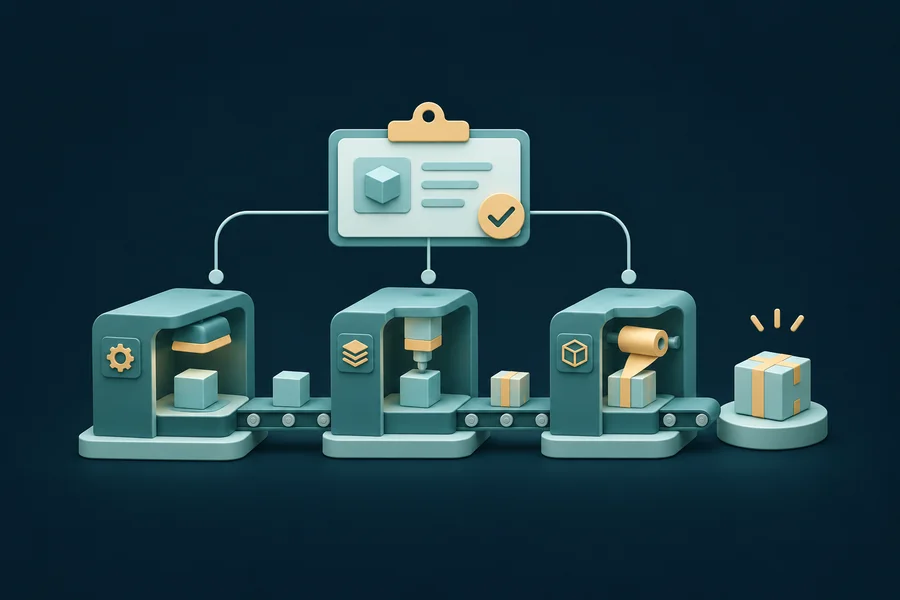
Imagine a manufacturer whose sales team takes orders by phone and email. Production tracks jobs in a spreadsheet, and dispatch keeps a separate list. Everyone is working, but answering a simple customer question means asking three people. This example explores a possible software workflow; it is not a report of a delivered client project.
Start with one order
Before choosing software, follow a real order through the business. Write down who receives it, who confirms the specification, who approves the price and who promises a delivery date. Include the exceptions: a revised quantity, unavailable material or a customer who changes the specification.
The first useful system does not need to replace every spreadsheet. It needs a shared order reference, clear ownership and a reliable record of the next action. Existing accounting and production tools can remain in place while the team tests that foundation.
Make handoffs visible
A proposed workflow could move from inquiry to quotation, approval, production, quality review and dispatch. Each stage needs an owner and an explicit condition for moving forward. A production delay should appear as a reason attached to the order, rather than an unexplained status colour.
A customer-facing update should be separate from internal notes. Staff can record a sensitive commercial discussion without accidentally publishing it to a dealer portal. Permissions and the history of changes belong in the initial scope.
- One order reference across sales, production and dispatch
- An owner, next action and expected date for each active job
- A revision history for quantities, specifications and promised dates
- An exception queue for blocked or overdue handoffs
Pilot before connecting everything
Choose one product family or one sales team for the pilot. Import only the active orders they need and agree who corrects duplicates. Run through a cancelled order and a partial dispatch before calling the workflow ready.
If the team needs an accounting or ERP connection, first confirm the available API or export format. Decide which system owns customer details, item codes and invoice numbers. Otherwise, integration can simply move conflicting records faster.
Measure the handoff
Record a baseline before the pilot: how often staff ask for a status update, how many orders lack an owner and how long an approval waits. Review those same measures during the pilot. These are questions to investigate, not promised improvements.
The decision to expand should come from the people using the workflow. If they still keep a parallel private list, find out what the shared system is missing before adding more features.
A useful starting point
Start with a shared order, a clear next action and visible exceptions. Add integrations once ownership of the information is settled.
Discuss a similar workflow →